
Thessaloniki, Greece — November 20, 2025
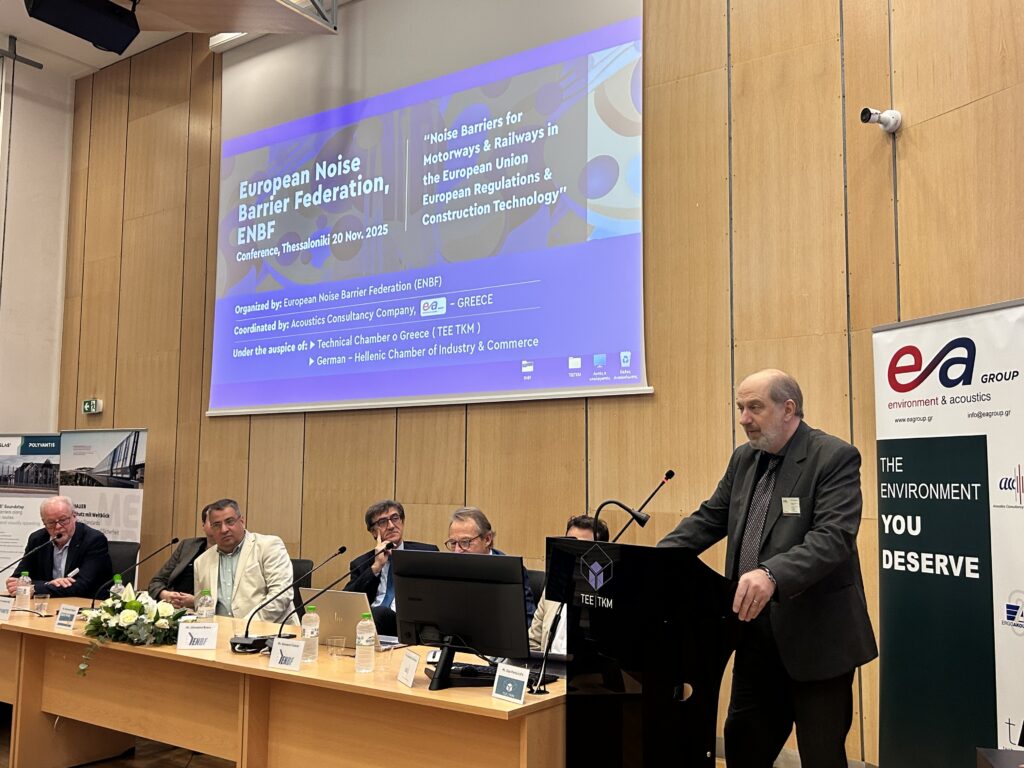
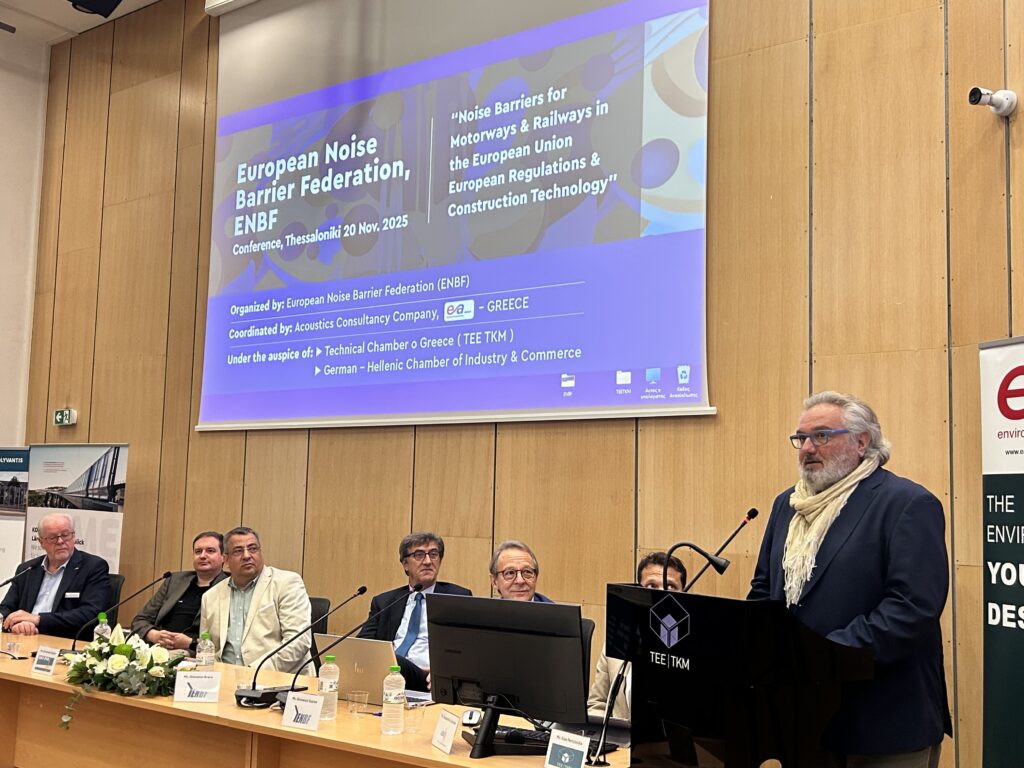
Experts, engineers, policymakers, and industry leaders gathered at the Technical Chamber of Greece – Department of Central Macedonia for the European Noise Barrier Federation (ENBF) Conference titled “Noise Barriers for Motorways & Railways in the European Union – European Regulations & Construction Technology.” The full-day event, held from 09:00 to 15:00, showcased how Europe is advancing noise mitigation infrastructure through harmonized standards, modern construction technologies, and a strong emphasis on sustainability.
Organized by the European Noise Barrier Federation (ENBF) and coordinated by the Acoustics Consultancy Company (ACC/eaGroup – Greece), the conference took place under the auspices of the Technical Chamber of Greece (TEE TKM) and the German Hellenic Chamber of Industry & Commerce.
Opening Session: Vision for a Quieter Europe
The event began with registration and a welcome session, followed by remarks from Mr. Ilias Pertzinidis, President of the Technical Chamber of Greece (TCG/SCM).
He highlighted the importance of noise mitigation as a key aspect of modern transport and urban planning.
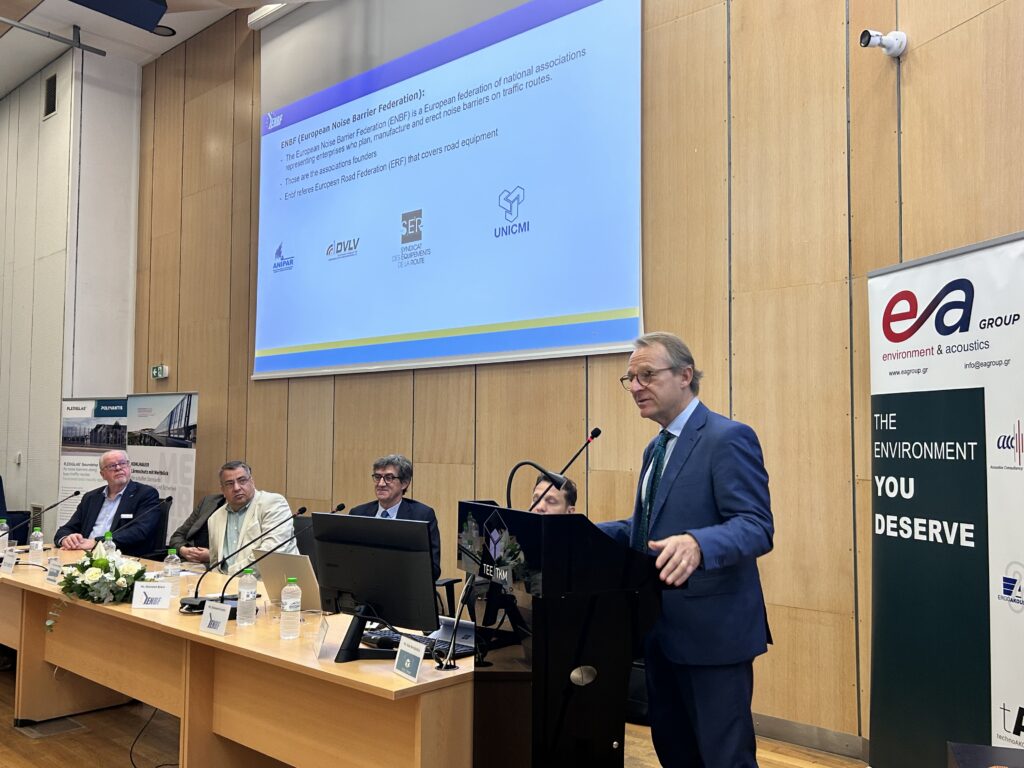
The introduction of the ENBF and its mission was delivered by Giovanni Cucco, ENBF President, who presented a clear and future-oriented message. He emphasized that noise pollution is a serious public health issue, linked to stress, cardiovascular disease, sleep disturbance, and reduced quality of life for millions of Europeans living near major transport corridors. Cucco outlined ENBF’s mission to create safer, quieter, and more sustainable environments across Europe by uniting industry leaders, engineers, researchers, notified bodies, and policymakers in a common effort to innovate and improve noise mitigation solutions. He stressed the ambition to integrate noise barriers into smart infrastructure that combines acoustic protection with renewable energy generation, biodiversity enhancement, and strong aesthetic design. Cucco also underlined that high performance, proven durability, and long-term warranties must become standard expectations for public infrastructure, which ultimately belongs to European citizens who demand and deserve quality installations. In outlining the Federation’s achievements and priorities, he pointed to key goals such as promoting advanced materials and smart technologies, supporting recyclable and low-carbon solutions, and strengthening collaboration with EU institutions to align with the Green Deal and future mobility strategies. He concluded with a call-to-action urging manufacturers, contractors, planners, and policymakers to work collectively to transform noise barriers into multifunctional assets and build a quieter, greener Europe.
Keynote: Cost-Benefit and Sustainability of Noise Barriers
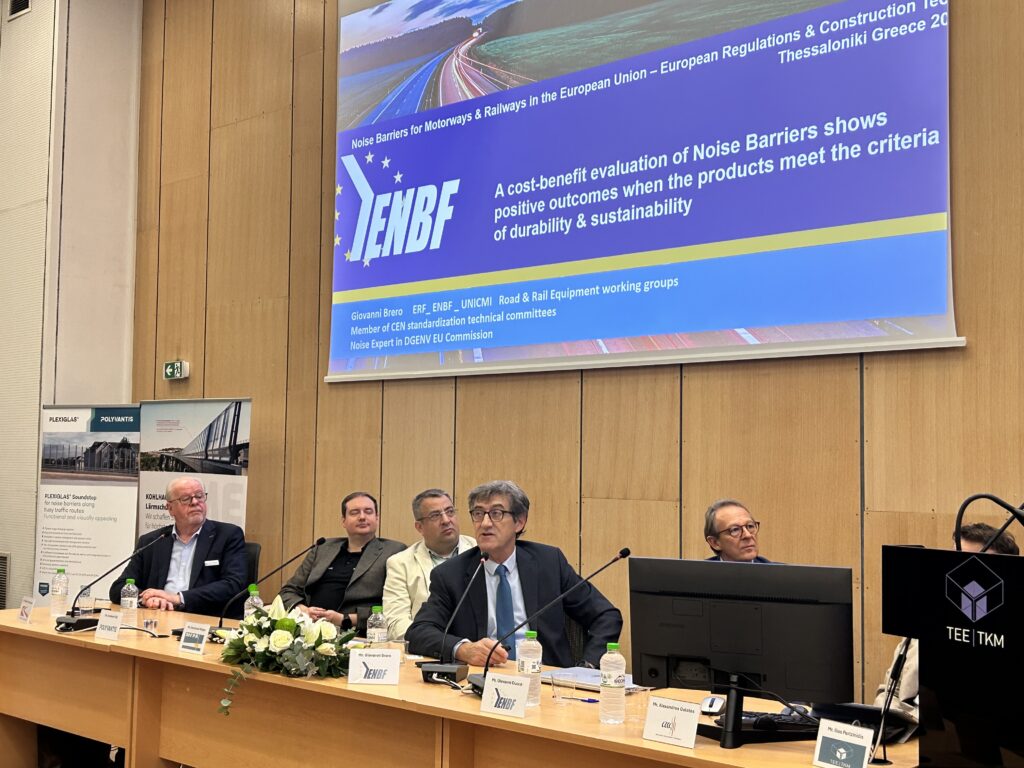
Following Cucco’s strategic vision, Giovanni Brero delivered a detailed technical presentation titled “A Cost-Benefit Evaluation of Noise Barriers Shows Positive Outcomes When the Products Meet the Criteria of Durability & Sustainability.” His intervention provided a rigorous analysis of why noise barriers remain one of the most effective and scalable solutions for mitigating transport noise.
Brero highlighted several key insights:
- Noise barriers deliver significant cost-benefit advantages when designed according to durability and sustainability criteria.
- Source-control measures like porous asphalt or rail track treatments can contribute to noise reduction, but their effects do not simply add up when combined with barriers; careful acoustic design is required to optimize overall performance.
- In both roads and railways, barriers remain the only solution capable of protecting large numbers of exposed residents, particularly in densely populated areas.
- Proper barrier performance relies on accurate modelling, material selection, in-situ testing, correct installation, and ongoing maintenance.
- Lifelong performance must be assessed through durability standards, safety evaluations, and sustainability indicators across all lifecycle stages.
Brero also emphasized that sustainability is no longer an optional addition but a core requirement. He discussed advancements in lifecycle assessments (LCA), the role of environmental product declarations, and the growing need for robust maintenance strategies supported by EU-wide standards.
His presentation reinforced the idea that well-designed barriers—tested, certified, and maintained—offer long-term value for public authorities and measurable health benefits for communities.
Technical Standards and Laboratory Excellence
European Standards for Noise Barrier Testing
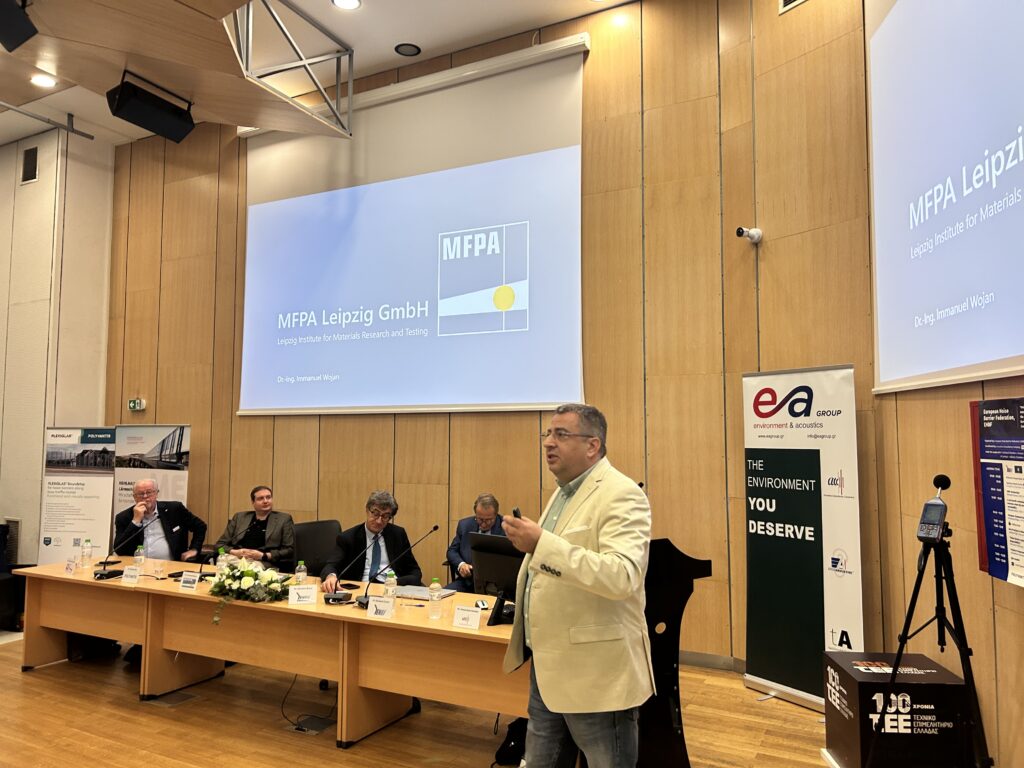
Immanuel Wojan, Head of Acoustics at MFPA Leipzig GmbH, provided a detailed review of the European standardization landscape. MFPA Leipzig, a leading notified laboratory for CE marking, conducts extensive acoustic, mechanical, and durability testing to ensure compliance and safety across both road and rail applications. Wojan outlined ongoing European Commission standardization efforts and emphasized the importance of unified test procedures for reliable market harmonization.
International Best Practices and Industry Experience
Best Practices in Noise and Wind Barriers – Worldwide
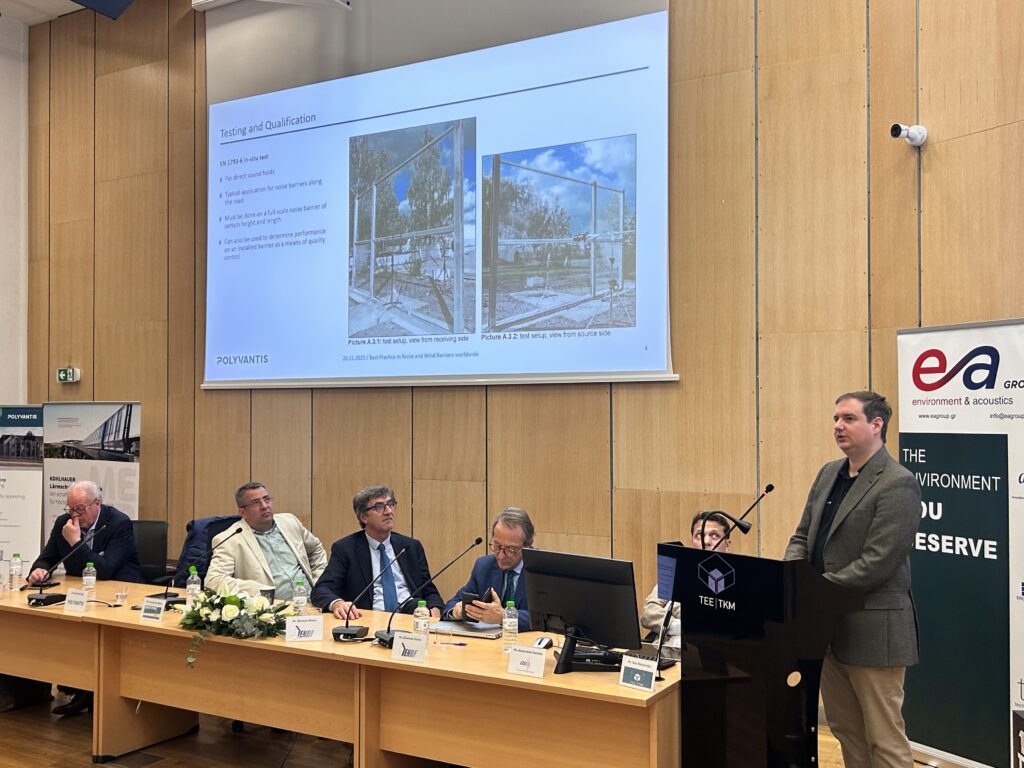
Andreas Figl of Polyvantis GmbH presented global case studies highlighting material innovation, transparent barrier design, and wind-resistant structures built with decades of experience in PLEXIGLAS® Soundstop technologies.
Supplier Quality Perspective
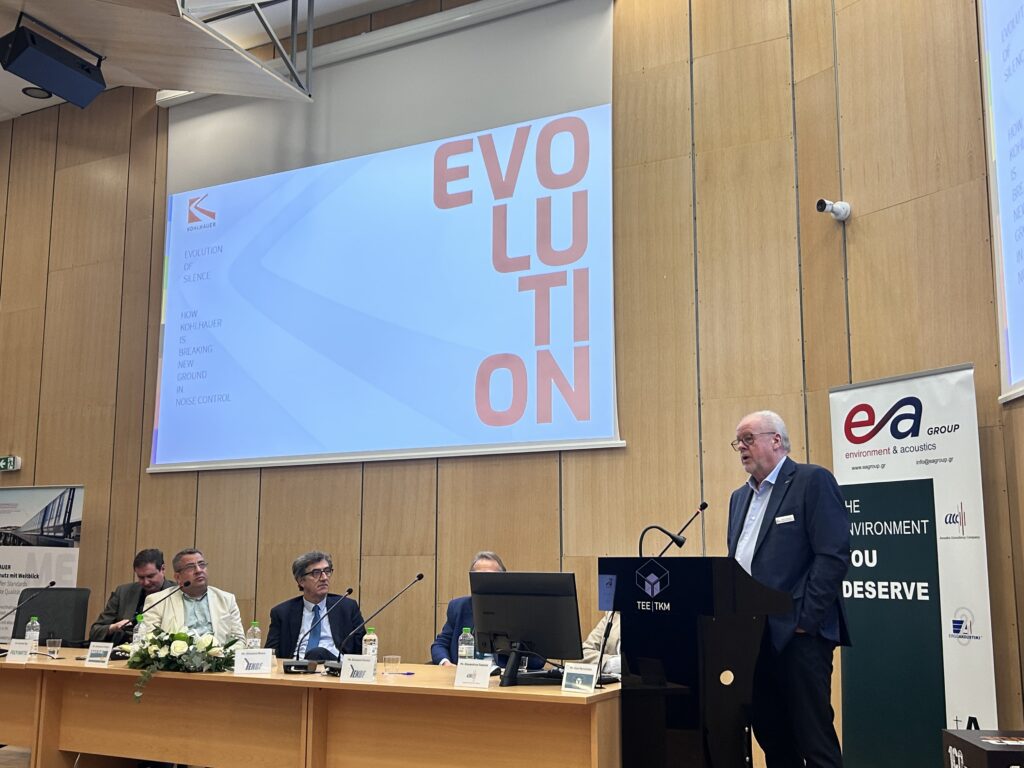
Reinhard Kohlhauer, Founder of R. Kohlhauer GmbH, discussed the evolution of manufacturer responsibility, particularly regarding advanced barrier functions such as greenable structures, transparent acoustic modules, and photovoltaic-integrated noise walls used across Europe.
Greece’s Real-World Applications
Alexandros Galatas, Chief Acoustic Consultant of ACC – eaGroup, showcased key Greek projects and representative installations, offering a national perspective on noise mitigation challenges.
His contribution highlighted state-of-the-art acoustic modelling, measurement techniques, and practical solutions applied across Greece’s transport network.
Interactive Dialogue and Networking
Participants engaged in a dedicated Q&A session that allowed for in-depth exchanges with the speakers.
The conference concluded with a networking lunch sponsored by Polyvantis GmbH, facilitating collaboration among stakeholders and fostering discussion about future industry directions.
Conclusion: A Forward-Looking Agenda for Europe
The ENBF Conference in Thessaloniki reinforced Europe’s commitment to high-performance, sustainable noise mitigation for both motorways and railways.
With growing emphasis on lifecycle performance, smart infrastructure, and environmental integration, noise barriers are evolving from simple acoustic screens into multifunctional components of Europe’s transport landscape.
From harmonized standards and cutting-edge materials to innovative designs and coordinated policy efforts, the sector is entering a new era of quality and sustainability — one that promises quieter, healthier, and greener communities across the European Union.